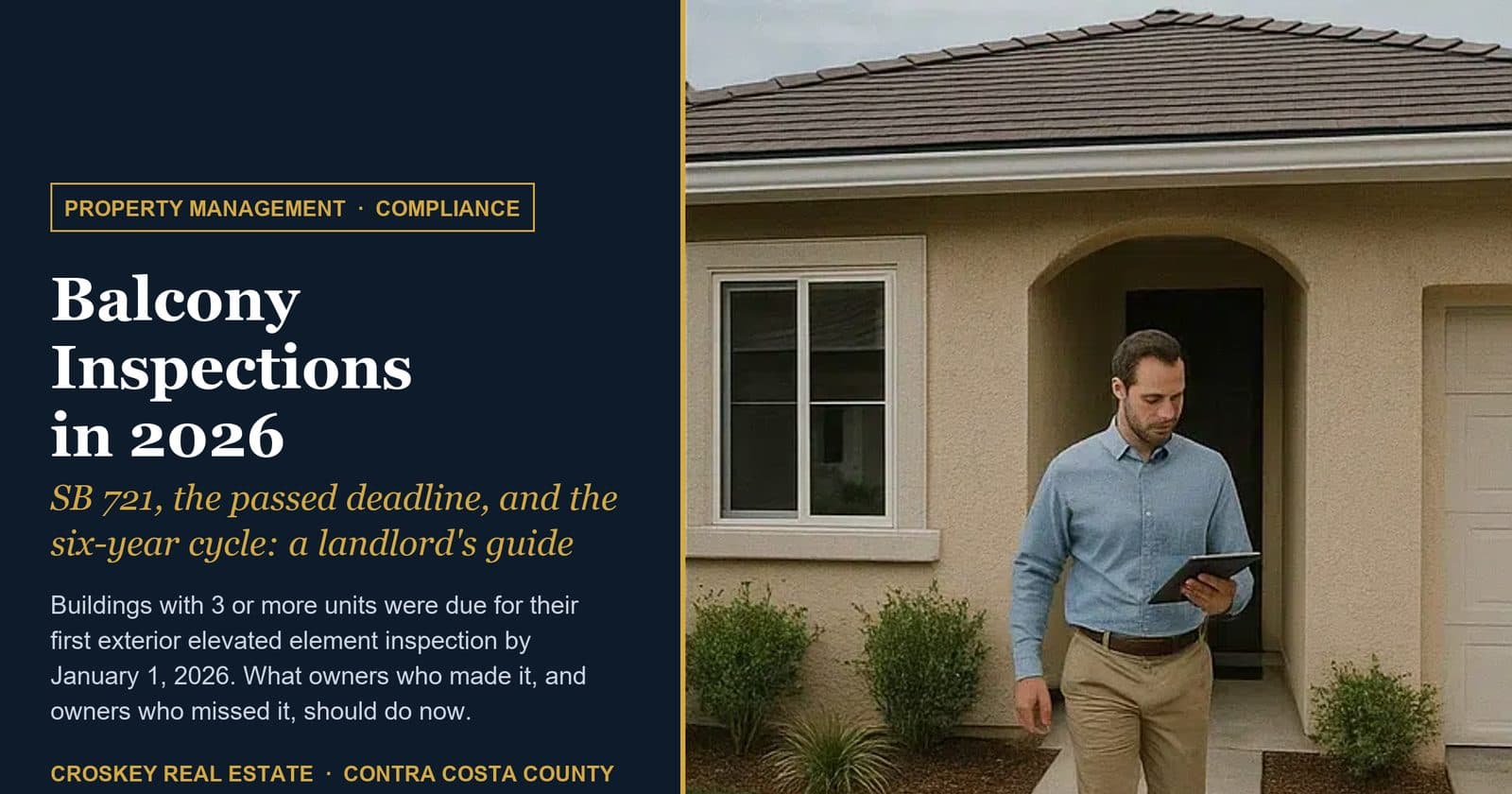
SB 721 stopped being a future deadline on January 1, 2026. For owners of California rental buildings with three or more units, the question is no longer when to comply; it is which side of the deadline you are standing on, and what that position costs.
The deadline is behind us, not ahead
If you own a California rental building with three or more units, the SB 721 clock has already struck. The law's first inspection deadline, originally January 1, 2025 and extended one year by AB 2579, passed on January 1, 2026. Every building in scope was required to have its first inspection of exterior elevated elements completed by that date.
For owners who completed it: the next cycle is already scheduled by law. For owners who did not: the practical answer is not panic, it is speed. Being late is a fixable condition; staying late is a liability that compounds.
SB 721 is one of several compliance deadlines this year - our California landlord laws guide tracks them all.
What SB 721 covers
SB 721 (Health and Safety Code section 17973) applies to buildings with three or more multifamily dwelling units and covers exterior elevated elements: balconies, decks, porches, exterior stairways, and walkways that are more than six feet above the ground and rely on wood or wood-based components for structural support.
The inspection must be performed by a qualified professional: a licensed architect, a licensed civil or structural engineer, a building contractor holding an A, B, or C-5 license with at least five years of relevant experience, or a certified building inspector. The inspector examines at least 15% of each type of exterior elevated element, which can include exploratory openings, and produces a written report the owner must keep.
If you missed the deadline
- Schedule the inspection now. Late compliance beats continued non-compliance in every scenario: enforcement exposure, insurance conversations, and above all resident safety. Inspector availability was the reason the Legislature extended the deadline once; demand remains high, so lead times are real.
- Know the enforcement picture. Local building departments can issue corrective notices, and continued non-compliance can bring civil penalties and, in some cases, liens. Enforcement is local, so timelines vary by city and county.
- Document everything. If a report identifies work, you generally have 120 days to complete non-emergency repairs. Immediate hazards require immediate action, including restricting access to the element until it is made safe.
If you completed your inspection
- Calendar the next one. SB 721 repeats every six years, so a building first inspected in 2025 is due again by 2031.
- Keep the reports. Inspection reports must be retained and available; they are also the paper trail that protects you if a question ever arises about the building's condition.
- Close out repairs on time. An inspection with open repair items is not a completed compliance cycle until the work is done and documented.
SB 721 or SB 326? Two laws, often confused
SB 721 applies to rental apartment buildings with three or more units. SB 326 is the parallel law for condominium and HOA communities, with its own deadline (January 1, 2025, not extended) and a nine-year cycle. If you own a rented-out condo, the HOA typically carries the SB 326 duty for common-area elements; your SB 721 exposure as an individual owner depends on what you own. When in doubt, ask before assuming either law does not apply to you.
Our read, from the operator’s chair
For the small multifamily stock we manage across Pittsburg, Antioch, Bay Point, and East Contra Costa, triplexes and fourplexes are exactly the buildings SB 721 reaches. Croskey Real Estate coordinates the pieces owners find hardest: sourcing a qualified inspector, scheduling around residents with proper notice, tracking the 120-day repair window, and keeping the reports with the property records so the six-year cycle never sneaks up again.
Quick reference for 2026
- Applies to: buildings with 3+ dwelling units, wood-supported elevated elements over 6 feet
- First deadline: January 1, 2026 (passed; AB 2579 extension included)
- Sample size: at least 15% of each element type
- Repairs: 120 days for non-emergency items; immediate action for hazards
- Cycle: every 6 years
- Condo/HOA version: SB 326 (different deadline and cycle)
This article is general information for California rental owners, not legal advice. Enforcement details vary by city and county; for advice about a specific building, consult a California real estate attorney or your local building department.
Croskey Real Estate supports the federal Fair Housing Act and California fair housing law. Equal Housing Opportunity.
Own a triplex or fourplex in East Contra Costa and unsure where you stand? Schedule a free consultation with our team.
(925) 336-3282 | info@croskeyrealestate.com
Frequently asked questions
Who is required to comply with SB 721 in California?
Owners of buildings with three or more multifamily dwelling units that have exterior elevated elements - balconies, decks, porches, stairways, or walkways more than six feet above the ground supported by wood or wood-based components. Single-family rentals and duplexes are outside SB 721; condominium and HOA communities fall under the parallel law, SB 326.
What happens if I missed the January 1, 2026 SB 721 deadline?
Schedule the inspection as soon as possible. Enforcement is handled locally: building departments can issue corrective notices, and continued non-compliance can lead to civil penalties and in some cases liens. A late inspection followed by documented repairs puts you back in compliance; waiting only increases exposure and, more importantly, risk to residents.
Who can perform an SB 721 balcony inspection?
A licensed architect, a licensed civil or structural engineer, a building contractor with an A, B, or C-5 license and at least five years of relevant experience, or a certified building inspector. The inspection covers at least 15% of each type of exterior elevated element and produces a written report the owner must retain.
How often do SB 721 inspections repeat?
Every six years. A building whose first inspection was completed in 2025 is due again by 2031. Repairs identified in any inspection generally must be completed within 120 days, with immediate hazards addressed right away.