Maintenance is where the owner-resident relationship most often breaks down, and where a self-managing housing provider (landlord) quietly loses the most money: slow responses frustrate residents, and small repairs age into expensive emergencies. The fix is not heroics; it is a workflow. These are the practices that keep repairs boring, and, because advice you can verify beats advice you have to trust, exactly how we run each one across the rentals we manage in Pittsburg, Antioch, Brentwood, Oakley, Bay Point and Concord.
1. One intake channel, documented end to end
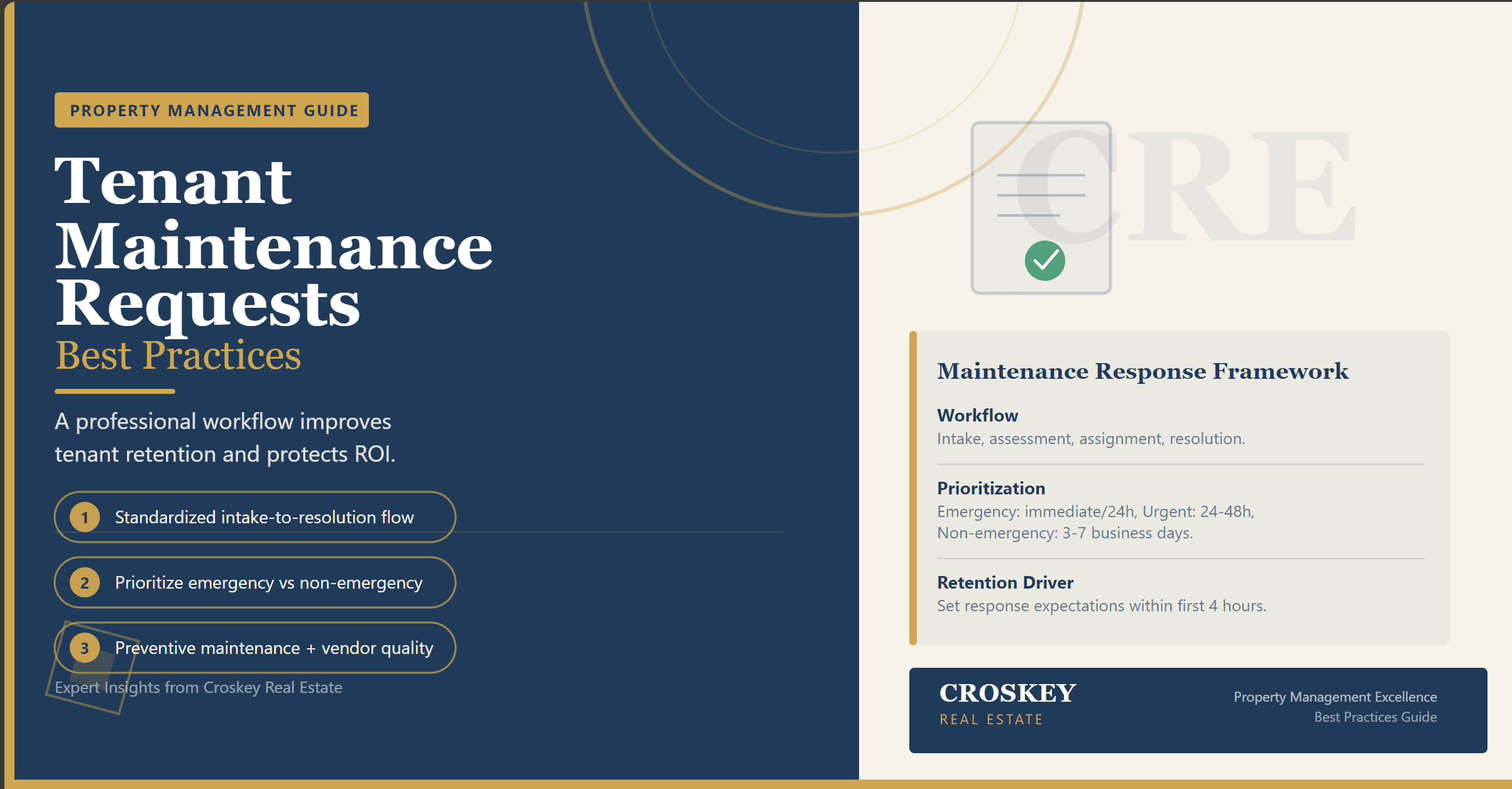
A fragmented process leads to missed emails and frustrated tenants. Every service request should follow a standardized path from intake to completion, through a single digital channel where residents attach photos and descriptions of the issue.
How we run it: residents submit every request through PropertyMeld, the maintenance platform our managed portfolio runs on. Each request is tracked from submission through vendor assignment, completion, and invoice review, and the outcome is preserved in the property’s history, so a recurring problem is visible before it becomes a capital replacement. The workflow every request follows:
- Intake: centralize all service requests via a dedicated portal.
- Assessment: use issue prioritization to determine the urgency.
- Assignment: dispatch the right professional through vendor coordination.
- Resolution: close the loop with maintenance tracking so the job is finished to standard.
2. Prioritize by urgency, not by noise
Not all repairs are created equal. Understanding the difference between emergency and non-emergency repairs is vital for legal compliance and budget management.
| Category | Examples | Required response time |
|---|---|---|
| Emergency | Burst pipes, gas leaks, total loss of heat/water, electrical fire hazards. | Immediate / within 24 hours |
| Urgent | Broken refrigerator, leaking faucet, partial power loss. | 24 to 48 hours |
| Non-emergency | Running toilets, cabinet hardware issues, cracked tiles. | 3 to 7 business days |
How we run it: our published standard is a maintenance acknowledgment within one business day and same-day response for emergencies, with a 24-hour emergency contact. Who pays for which repair, the Civil Code 1941.1 habitability split, is covered line by line in our repair responsibility guide.
3. Prevent the request before it exists
The most cost-effective way to handle repair requests is to prevent them. Scheduled condition assessments and routine upkeep, such as HVAC filter changes and gutter cleaning, extend the lifespan of expensive systems and reduce the volume of requests.
How we run it: every Croskey management plan includes scheduled condition assessments, and the findings feed the same property history the maintenance workflow reads.
4. Vendor coordination without hidden economics
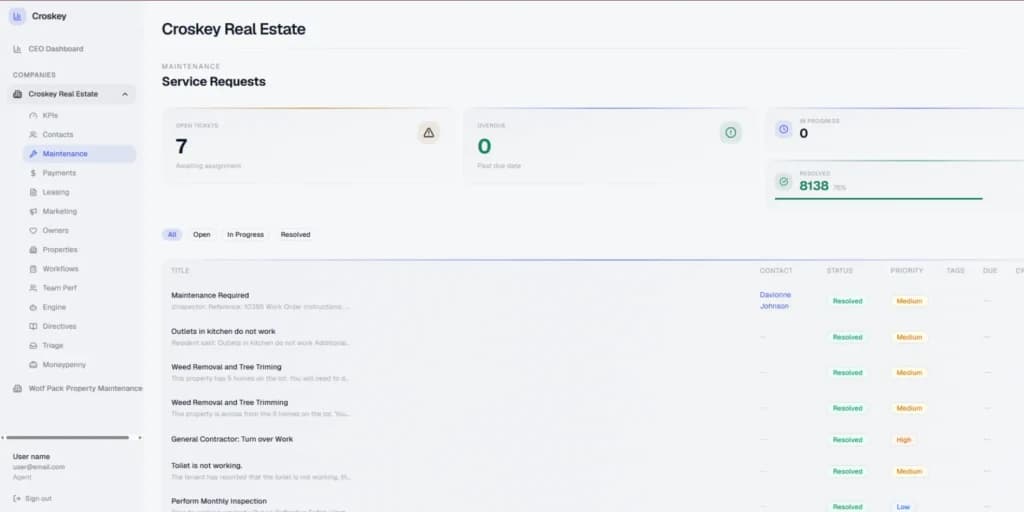
Quality vendor coordination ensures repairs are done correctly the first time. We maintain a vetted network of licensed and insured contractors across East Contra Costa, at rates negotiated from volume, not desperation.
How we charge for it, in the open: the vendor’s invoice pays the vendor; we add no percentage markup. On our Core plan, coordination is $49 per completed routine work order, and if the same unresolved issue reopens within 30 days, Core is not charged again. On the upper plans routine coordination is included. Your repair authorization limit is set per property in the management agreement: routine work below it is handled and itemized, and non-emergency work above it comes to you first. A question owners often raise here: can a manager charge coordination fees or markups at all? In California, yes, when properly disclosed; Can Property Managers Charge for Maintenance? covers what your agreement should say.
5. Pick the maintenance lane that fits you
Maintenance looks different by service model. Under full-service management the workflow above runs for you end to end. Under lease-only placement we place the resident and maintenance is yours from day one. And self-managing with your own vendor bench is a legitimate lane; this guide works as-is, the repair responsibility split included.
And if the checklist mindset itself interests you, the thinking behind how we design these processes is its own read: The Forge Method walks through why each step exists before it ever gets written down.
Frequently asked questions
How quickly must a landlord respond to maintenance requests in California?
California law requires landlords to address habitability issues (heat, water, plumbing) within a reasonable time - generally 30 days for non-emergency repairs and within 24-48 hours for emergencies. Croskey Real Estate uses a documented maintenance workflow with timestamped responses to protect owners from liability.
Can a tenant withhold rent for unaddressed maintenance in California?
Yes. California Civil Code allows rent withholding, repair-and-deduct remedies, and even lease termination if habitability standards are not met. Prompt, documented responses to maintenance requests are the primary defense against these claims.
What is the best way to document tenant maintenance requests?
All requests should be submitted and tracked through a written system - email, a portal, or a property management platform - with dates, photos, and vendor responses logged. Croskey Real Estate uses AppFolio to create a timestamped paper trail for every work order.
How can a property manager reduce recurring maintenance costs?
Preventive maintenance programs - annual HVAC servicing, gutter cleaning, and property condition assessments - catch small issues before they become expensive repairs. Croskey Real Estate schedules routine inspections for all managed properties in East Contra Costa County.